What Does A Tree Removal Service Actually Do From Start To Finish
From the first phone call to the final sweep-up, their job is to remove a tree with controlled, planned steps that reduce danger to people, buildings, fences, vehicles, and surrounding plants.
What happens during the first enquiry and booking?
When contacting a tree removal service, they’ll ask what tree it is, roughly how tall it seems, what the access is like, and why removal is needed. They may request photos of the tree, the base, and the surrounding area to spot hazards early.
They’ll then book a site visit or confirm a quote route. If the tree is urgent, for example after storm damage, they’ll prioritise safety and may arrange emergency attendance.
How do they check whether a tree can legally be removed?
They’ll consider whether the tree is protected by a Tree Preservation Order (TPO) or sits within a conservation area. If protection may apply, they should advise the client to check with the local council before work starts.
If permission or notice is required, they’ll typically explain the process and what information is needed. Reputable services avoid starting work that could put the client at risk of enforcement action.
What do they look for during the on-site assessment?
They assess the tree’s condition, lean, deadwood, decay, cracks, root stability, and how failure might occur. They also map what could be hit: buildings, greenhouses, power lines, patios, roads, sheds, and neighbouring gardens.
They’ll check access for a truck, chipper, and equipment, plus whether waste can be moved safely. This visit is where they decide the method: straight fell, sectional dismantle, or specialist rigging.
How do they decide the safest removal method?
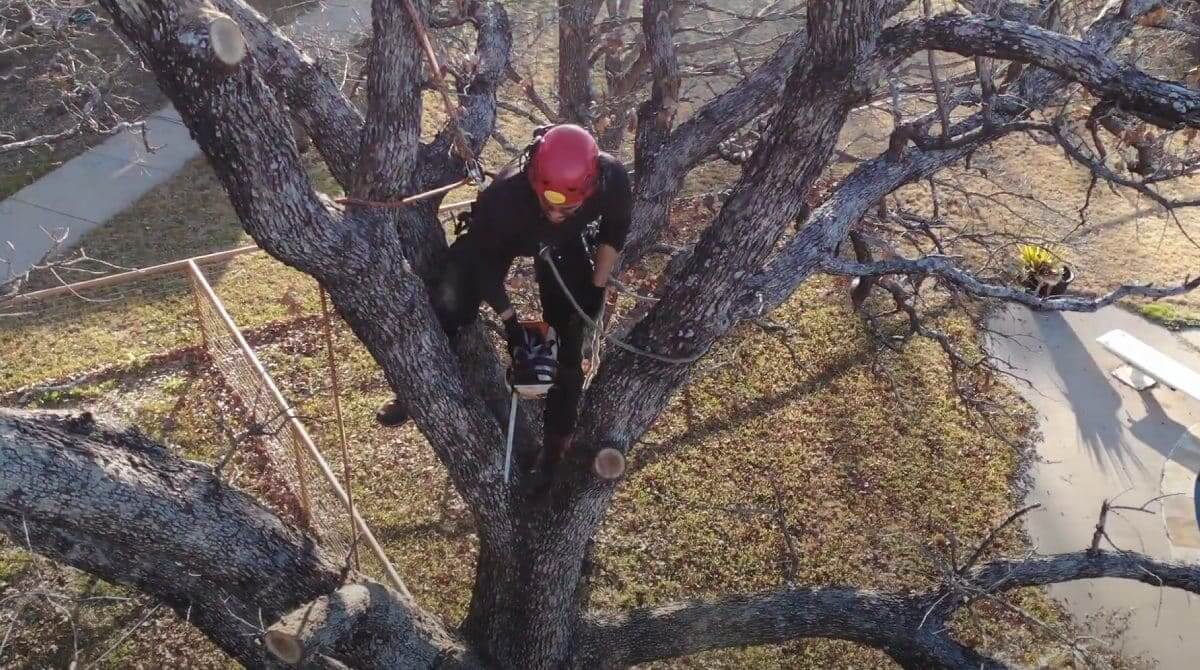
If space allows, they may fell the tree in one piece using directional cutting and wedges. If space is tight, they’ll dismantle it in sections, usually from the top down, controlling each piece as it drops.
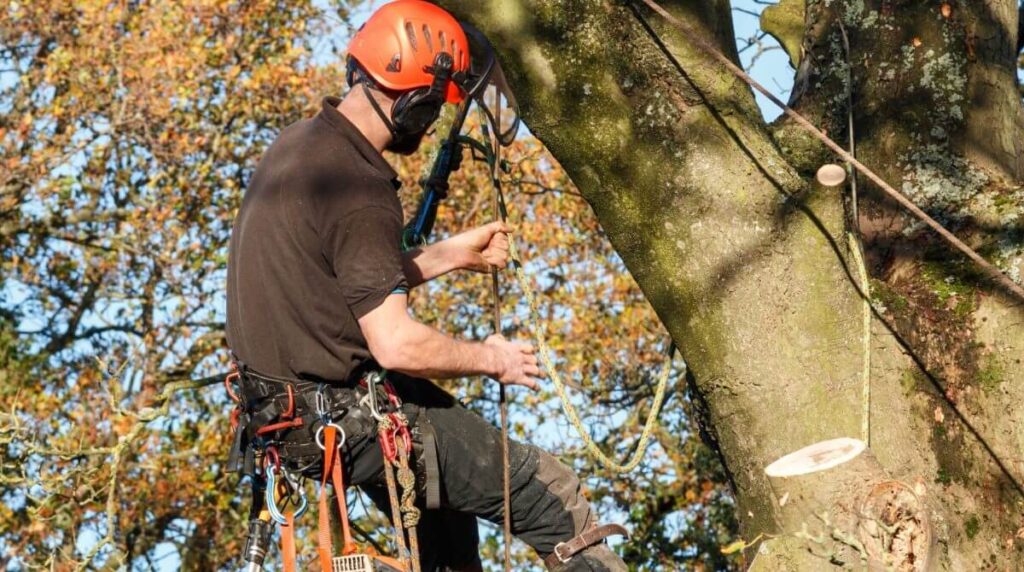
Near structures, they may use ropes and rigging to lower limbs in a controlled way. If the tree is unsafe to climb, they may use a MEWP (cherry picker) or other access method.
What safety controls do they put in place before cutting starts?
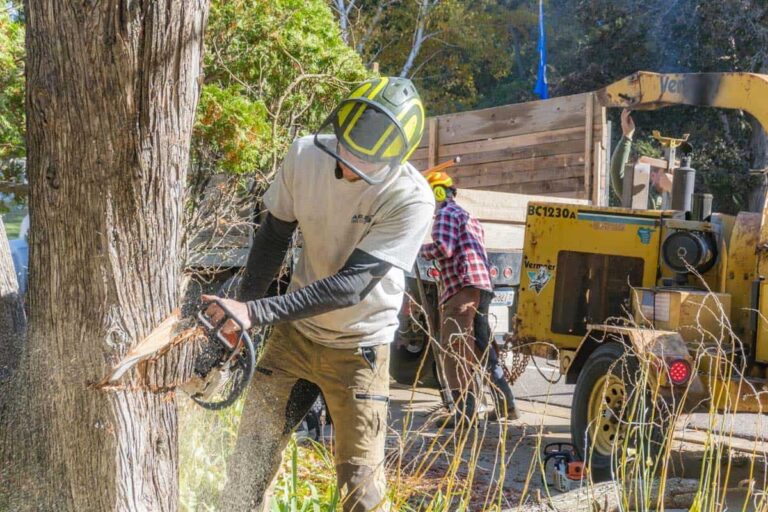
They’ll set up an exclusion zone and keep bystanders out of the drop area. They’ll wear PPE such as helmets with visors, chainsaw protection, gloves, and safety boots, and they’ll check tools before use.
If the work affects a pavement or road, they may use cones, signage, or traffic management. They also plan escape routes and communication so the team moves predictably around hazards.
What does the actual tree removal process look like?
They typically start by removing smaller branches to reduce weight and create working space. For dismantles, they remove upper sections first, then progressively work down the stem, lowering pieces where needed.
They’ll manage the direction and speed of cuts to prevent splitting or uncontrolled swings. The aim is controlled removal, not speed, especially where property or people could be affected.
Other Resources : Apply to prune or remove a tree
What happens to the branches, logs, and debris?
They usually chip smaller branches on site and load chips into a truck, unless the client requests mulch left behind. Larger wood is cut into manageable lengths and stacked, removed, or left as logs depending on the agreement.
They’ll rake and gather smaller debris as they go to keep footing safe. A professional finish includes tidying borders, lawns, and access routes used during the job.
Do they remove the stump as well, or is that separate?
Stump removal is often optional and priced separately. If included, they’ll use a stump grinder to reduce the stump below ground level, then backfill the hole with grindings or soil depending on the plan for the area.
If stump grinding is not chosen, they’ll usually cut the stump close to ground level. They should explain the regrowth risk for certain species and what that means for future maintenance. Check out more about Tree Removal Cost Sydney Explained: What Impacts Pricing Most.
How do they leave the site once the work is finished?
They’ll do a final clear-up, remove waste as agreed, and check for stray branches, sawdust piles, and hidden debris in shrubs. They’ll also confirm whether any garden features were moved and return them where possible.
They should walk the client through what was done, what was removed, and what remains. If there’s follow-up advice, such as monitoring nearby trees, they’ll share it before leaving.
FAQs (Frequently Asked Questions)
What should I expect during the first enquiry and booking for tree removal?
During the initial contact, the service will ask about the type of tree, its approximate height, access conditions, and reasons for removal. They may request photos of the tree and surrounding area to identify hazards early. Based on this, they’ll arrange a site visit or provide a quote and prioritise urgent cases like storm damage.
How do tree removal services ensure legal compliance before removing a tree?
They check if the tree is protected by a Tree Preservation Order (TPO) or located within a conservation area. If so, they advise clients to consult the local council before starting work. Reputable services avoid proceeding without necessary permissions to prevent enforcement issues.
What does an on-site tree assessment involve?
The assessment examines the tree’s health, lean, deadwood, decay, cracks, root stability, and potential failure modes. They also map nearby structures such as buildings, power lines, and gardens that could be affected. Access for equipment and waste removal is evaluated to determine the safest removal method.
How is the safest method for tree removal chosen?
If space permits, the tree may be felled in one piece using directional cuts and wedges. In tight spaces or near structures, sectional dismantling with ropes or rigging is used to lower limbs safely. Unsafe trees might require mechanical access like cherry pickers to ensure controlled removal.
What safety measures are implemented during tree removal?
An exclusion zone is established to keep bystanders safe. Workers wear personal protective equipment including helmets with visors, chainsaw protection, gloves and boots. Tools are checked beforehand. Traffic management like cones and signage may be used if pavements or roads are affected. Escape routes and team communication are carefully planned.
What happens to branches, logs and debris after tree removal?
Smaller branches are chipped on site with chips either removed or left as mulch per client preference. Larger wood is cut into manageable lengths for stacking, removal or leaving as logs according to agreement. The site is tidied continuously to maintain safe footing and final clean-up includes clearing borders and access routes used during work.