Sydney is one of the most heavily treed capital cities in Australia, and that greenery comes with responsibility. Storm seasons are getting harsher, root systems are colliding with older stormwater infrastructure, and backyard subdivisions are pushing mature gums closer to buildings than ever. When a tree becomes structurally unsound, diseased or simply unsuited to the space it occupies, professional tree removal Sydney wide is not a luxury. It is a risk management decision.
A falling limb from a mature eucalypt can weigh several hundred kilograms. It does not need to be a whole tree failure to cause catastrophic damage to a roof, a car, a fence or a person. That is why the industry is regulated, why councils require approvals, and why the cheapest quote in your inbox is very rarely the right one.
Signs You Need Professional Tree Removal
Not every problem tree needs to come down. A good arborist will always try to retain a tree if it can be made safe. However, there are clear warning signs that removal is the correct call:
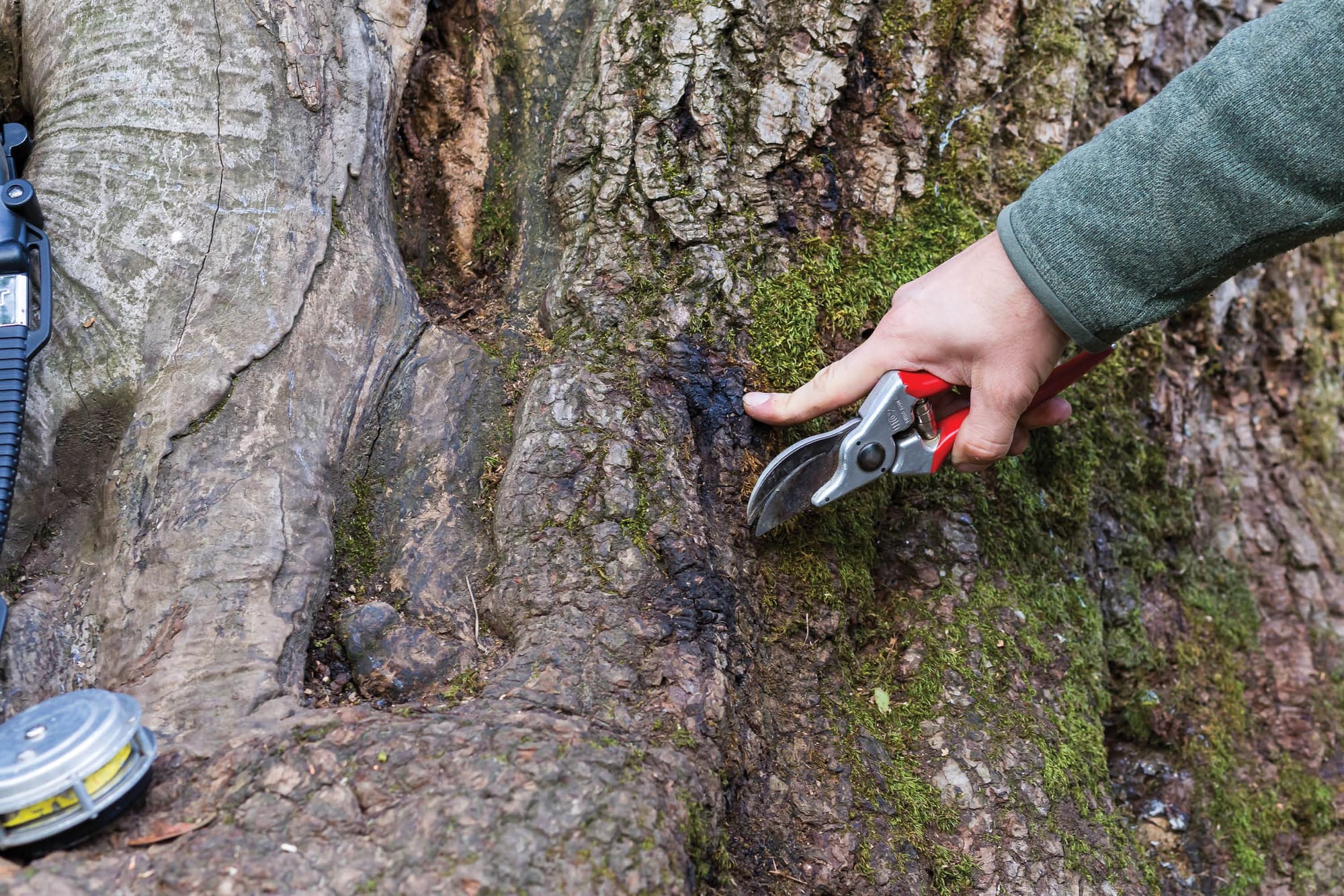
- Fungal fruiting bodies at the base or on the trunk. Bracket fungi often indicate advanced internal decay that hollow-sounding taps will confirm.
- Significant lean with soil heave. A new lean paired with cracked or lifted soil on the opposite side means the root plate is failing.
- Deadwood through the upper canopy. Widespread dieback suggests root damage, drought stress or disease.
- Included bark unions. Tight V-shaped forks with bark trapped between stems are structurally weak and prone to splitting in storms.
- Roots damaging structures. Lifted paving, blocked sewer lines and cracked foundations often force the issue.
- Wrong tree, wrong place. Fast-growing species planted a metre from a boundary fence will never be sustainable.
Sydney Council Rules You Cannot Ignore
This is where most homeowners get caught out. Nearly every Sydney council protects trees above a certain height or trunk diameter under a Tree Preservation Order or a Development Control Plan. Removing a protected tree without council approval can attract fines that dwarf the cost of the job itself.
The general rule of thumb across Greater Sydney is that trees over roughly three to five metres in height, or with a trunk circumference above a set threshold, require written council consent before removal. Exemptions typically exist for declared noxious weed species, trees within a set distance of an approved dwelling, and genuine emergencies where the tree presents an immediate danger.
A reputable tree removal Sydney contractor will handle the permit application for you, or at minimum tell you exactly what your council requires. If a company tells you “don’t worry about council”, walk away. The liability lands on the property owner, not the contractor.
What Qualifications Should Your Contractor Hold?
The Australian Qualifications Framework sets the benchmark for the arboriculture industry:
- AQF Level 3 Arborist — the minimum standard most councils accept for hands-on pruning and removal work.
- AQF Level 5 Consulting Arborist — required by many councils, including the City of Sydney, to author the tree report that supports a removal application.
Beyond qualifications, insist on evidence of public liability insurance (a minimum of $20 million is standard for
Sydney work) and current workers compensation cover. Ask whether the crew works to AS 4373-2007 Pruning of Amenity Trees and follows Safe Work Australia’s tree-work guidance. Any professional will answer these questions without hesitation.
How the Tree Removal Process Actually Works
- Site inspection and quote. An arborist assesses tree health, species, access, proximity to structures and powerlines, then provides a fixed written quote.
- Approvals. Council permits, and if the tree sits near overhead lines, a service provider shutdown or a tiger tail installation.
- Site setup. Exclusion zones, drop zones, property protection, traffic control if the work touches a road or footpath.
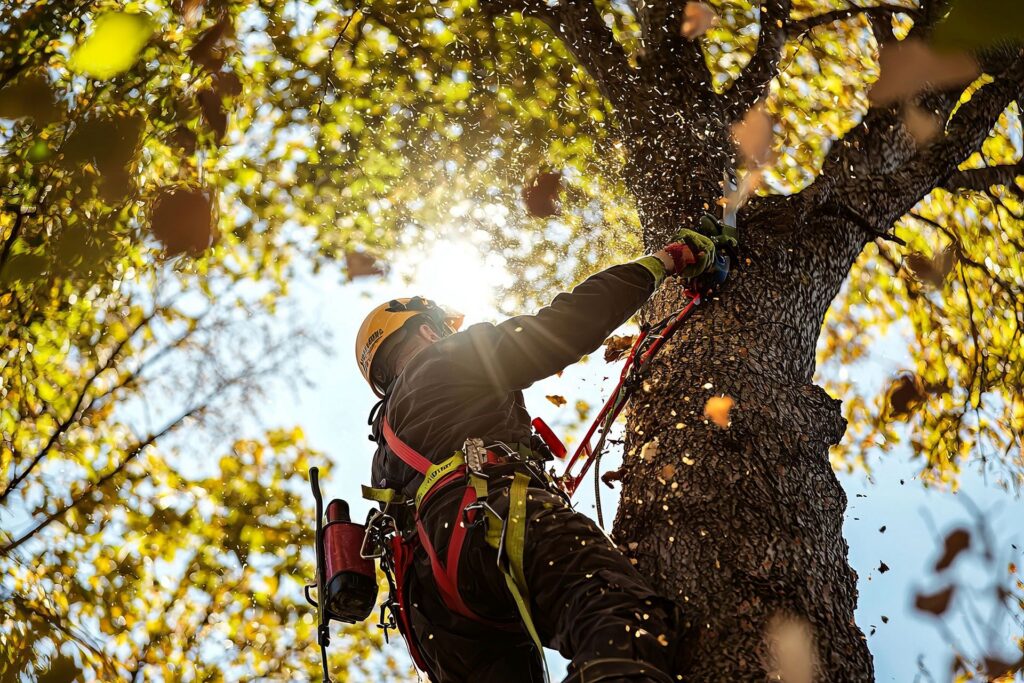
- Sectional dismantling. In tight suburban blocks, trees are almost never simply felled. A climber or elevated work platform operator removes the tree in controlled sections, lowering each piece on rigging lines.
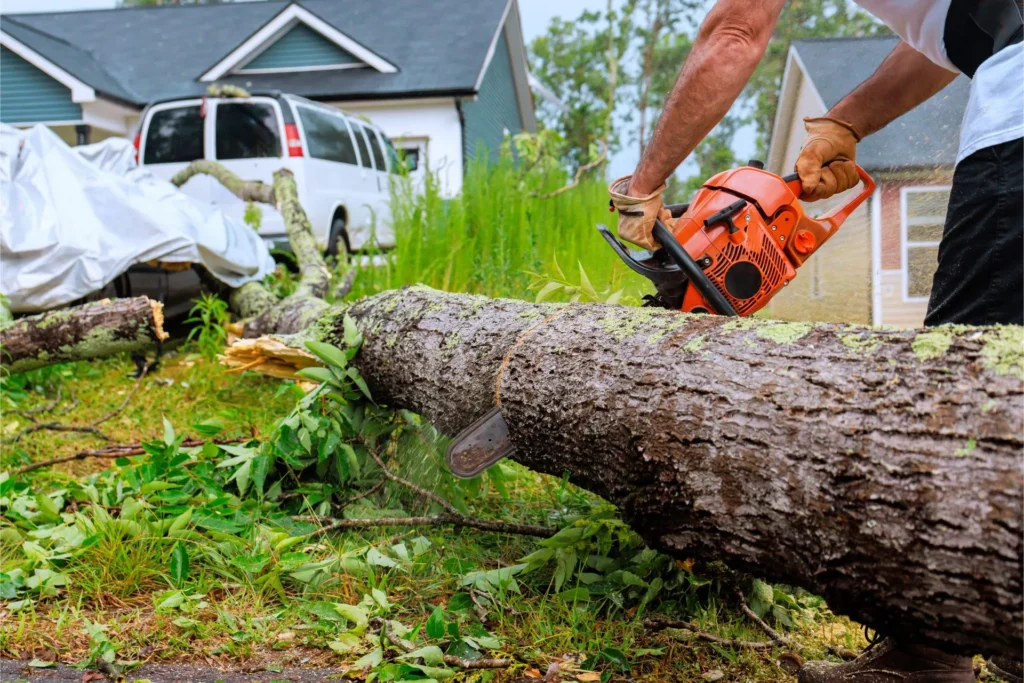
- Processing and clean-up. Branches go through a chipper, logs are cut to size, and the site is raked clean. Ask whether the mulch and firewood can stay on site if you want it.
- Stump grinding. Usually quoted separately. Grinding to 300mm below grade allows for turf or garden bed reinstatement.
What Does Tree Removal Cost in Sydney?
Pricing depends on four things far more than tree height alone: access, proximity to structures, timber volume, and disposal. As a broad guide across the Sydney market:
A crane-assisted removal in a courtyard with no street frontage will always cost more than a paddock tree with a driveway alongside it. Get three written quotes, and be suspicious of anything dramatically below market. Underquoted jobs are usually uninsured jobs.
Safety: Why DIY Tree Removal Goes Wrong
Tree work consistently ranks among the most dangerous occupations in Australia. The hazards are not obvious to an untrained eye: stored tension in a bent limb, barber-chairing on a back-leaning trunk, chainsaw kickback, and the sheer unpredictability of decayed timber. Add a ladder and an extension cord and you have a genuinely life-threatening afternoon.
Home insurance policies also frequently exclude damage caused by unlicensed work you performed yourself. A $1,500 removal becomes a $40,000 roof claim you fund personally.
Choosing the Right Tree Removal Sydney Company
Use this checklist before you sign anything:
- Written, itemised quote (removal, stump, green waste, traffic control listed separately)
- Certificate of currency for public liability and workers comp
- AQF Level 3 minimum on the crew, Level 5 for reports
- Clear statement on council approval responsibility
- Confirmation the site will be left clean and mulch removed or retained per your preference
- Genuine local reviews mentioning suburb names, not generic five-star filler
Good tree removal Sydney operators are busy, book out a week or two ahead, and will happily tell you when a tree does not need removing. That honesty is the strongest signal you have found the right crew.
Aftercare: What to Do With the Space
Once the tree is gone, the ecological gap is real. Consider replanting with a species appropriate to the mature space available. Locally native options such as Banksia integrifolia, Angophora hispida or a lilly pilly cultivar give you canopy without the structural risk of a 30-metre gum next to a bedroom. Reuse the chipped material as mulch on garden beds to retain moisture through summer.